Red Light Therapy,
explained.

How it works, what to expect, and whether it’s right for you.

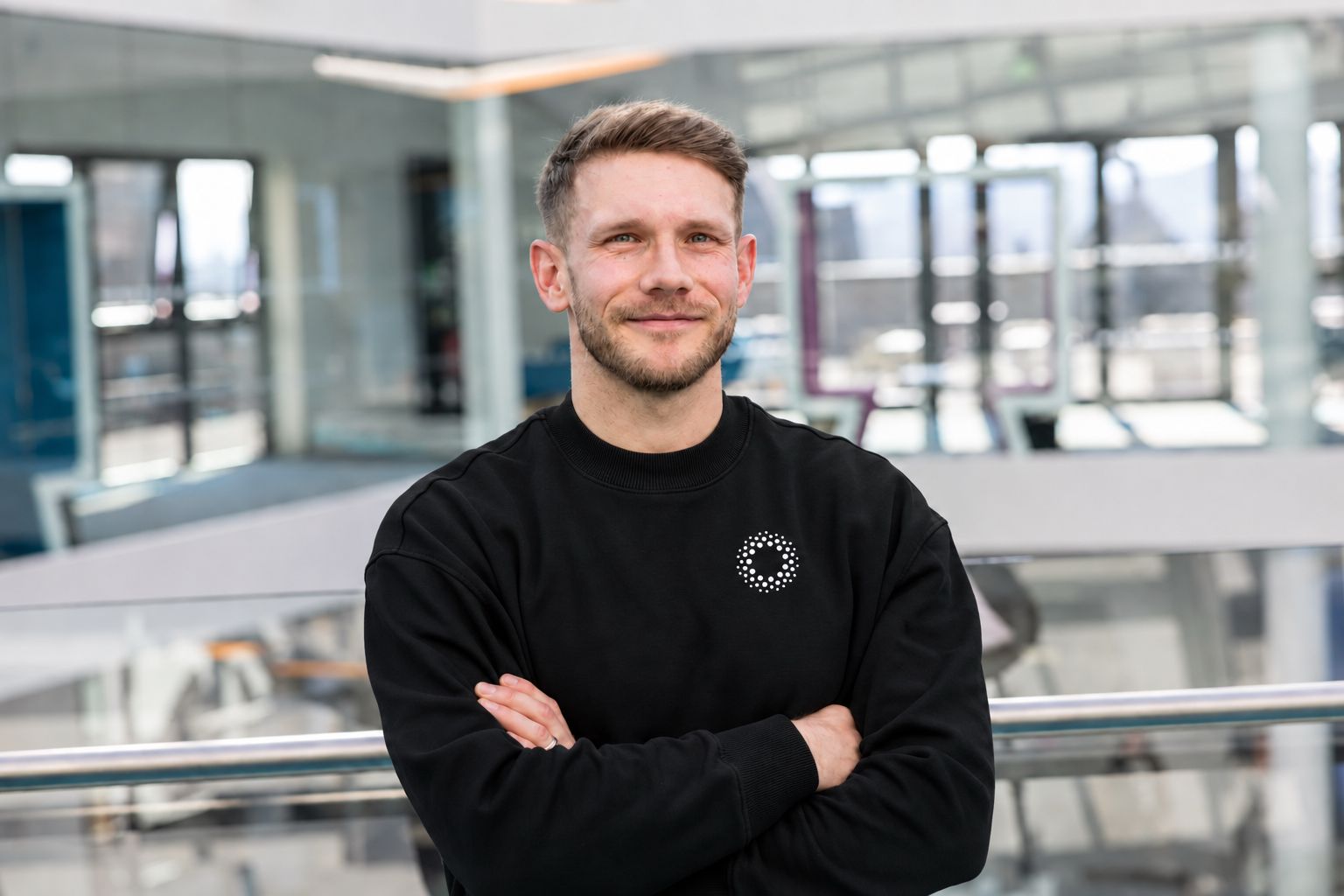
Alan visits Professor Glen Jeffery at UCL. Several of the findings on this page come from Professor Jeffery’s lab, whose research programme we support. Watch him explain how Red Light Therapy works in our series, The Human Edge.

Eight simple steps.

The short version of what the light actually does. Open any step for the detail.

What red light therapy is

Your cells absorb specific wavelengths of red and near-infrared light. An enzyme in the mitochondria takes up that light, which supports energy production and sets off repair signalling. The goal is not heat, tanning or glow. It is dose.

The full picture

Also called photobiomodulation, which is the word you will see in the research.

Specific shades of red and near infrared light are absorbed inside your cells and nudge their energy production. The goal is not heat, tanning or making skin look red: it is delivering a measured dose of light the body can use.

The important part is consistency. Red light is not usually about one dramatic session. It works best as a regular routine at a sensible dose, which is why the important questions are wavelength, power at the skin, time and distance rather than how bright a device looks.

Where it is used

Skin and visible ageing, muscle recovery and joint comfort, and a wider researched field reaching brain, sleep and vision. The evidence ranges from randomised trials and meta-analyses to early studies, and it is laid out on the clinical studies page.
Red · 620 to 700nmVisible. Works where you can see it: skin, surface circulation, collagen routines.
Near infrared · 700 to 1000nmMostly invisible. Travels deeper, into muscle, joints and soft tissue.

Red and near infrared: a spectrum of depths

How deep the light reaches depends on its wavelength, and it changes gradually rather than in two steps. Red light works mostly at the surface: skin, circulation, collagen. Near infrared is largely invisible and reaches further, into muscle, joints and soft tissue. They are usually used together.

The full picture

The wavelength decides how deep the signal travels.

Red, the surface

You can see it, and it works where you can see: skin quality, surface circulation, collagen-supportive routines, visible ageing goals, scalp and hair.

Near infrared, deeper

Mostly invisible, and it travels further, into muscle, joints and soft tissue. This is the waveband discussed around recovery and performance.

Deeper than you would think

Professor Glen Jeffery’s lab at UCL has shown long-wavelength light passes through skin and even bone, scattering through the body. In his experiments it also passed through several layers of clothing, whatever the colour, and through closed eyelids. Effects can be systemic, not just where the light lands. Red and near infrared are usually used together: red for the surface, near infrared for depth.

What happens inside the cell

Red and near infrared light is absorbed by cytochrome c oxidase, the light receiver inside your mitochondria. The nudge helps cells make more ATP, the fuel they repair with.

The five mechanisms

Five mechanisms, in plain English. Why light may help, not a promise that it will.

  1. The light receiver

    Red and near infrared light is absorbed by cytochrome c oxidase, the main light receiver inside your mitochondria. That is the doorway for everything else.

    Professor Glen Jeffery’s own view is that much of the absorption happens in the water packed around mitochondria, making it less viscous so the energy machinery turns more freely. Still being tested, and the practical result is the same: more ATP.

    What lies at the heart of photobiomodulation · Review, 2020
  2. More cellular energy

    The nudge helps cells make more ATP, their fuel. With more available energy, normal repair and recovery run more efficiently.

    Powner & Jeffery · Journal of Biophotonics, 2024
  3. Blood flow

    Light supports circulation through nitric oxide, a signalling molecule involved in blood flow and mitochondrial function.

    Hamblin · BBA Clinical, 2016
  4. Calmer inflammation

    Some inflammation is part of healing, but too much for too long slows recovery. Photobiomodulation is studied for settling an over-active recovery environment.

    Hamblin · AIMS Biophysics, 2017
  5. Skin’s scaffolding

    In a randomised controlled trial, red and near infrared light measurably increased intradermal collagen density and improved skin appearance.

    Wunsch & Matuschka · Photomedicine and Laser Surgery, 2014

Mechanisms describe biology being researched, not a promise of individual results or a treatment claim.

What your body does with it

More energy for repair shows up differently depending on the tissue: skin scaffolding, muscle recovery, circulation. And some effects are systemic. The light does not only work where it lands.

Applied to real goals

The same handful of cellular effects, in different combinations.

  • Anti-ageing & beauty

    Collagen density, skin tone and texture, measured in randomised trials. The scaffolding biology under skin quality.

    Main mechanisms: collagen synthesis · circulation · calmer inflammation
  • Recovery & discomfort

    Meta-analyses report benefits for knee osteoarthritis pain and neck pain, including one in The Lancet.

    Main mechanisms: calmer inflammation · circulation · cellular energy
  • Sports recovery & performance

    Studied for muscular performance and reduced fatigue across systematic reviews of randomised trials.

    Main mechanisms: mitochondrial ATP · muscle oxygenation · calmer inflammation
  • Longevity & brain health

    Transcranial trials report cognition and BDNF gains in adults over 50. A young field, presented as research.

    Main mechanisms: cellular energy · circulation · calmer inflammation
  • Sleep

    A controlled trial in athletes reported better sleep quality and melatonin after evening red light. Small, but real.

    Main mechanisms: circadian signalling · nervous-system settling

The research we follow, with the man leading it

Several of these findings come from Professor Glen Jeffery’s lab at UCL, whose research programme we support: a 15 minute dose of red light lowering a blood sugar spike by around 28%, and long wavelengths passing through skin, clothing and even bone. The gains are clearest from around 40, when ageing mitochondria have the most room to recover.

Each goal has its own evidence base, some strong, some early.

See the clinical studies

What a session feels like

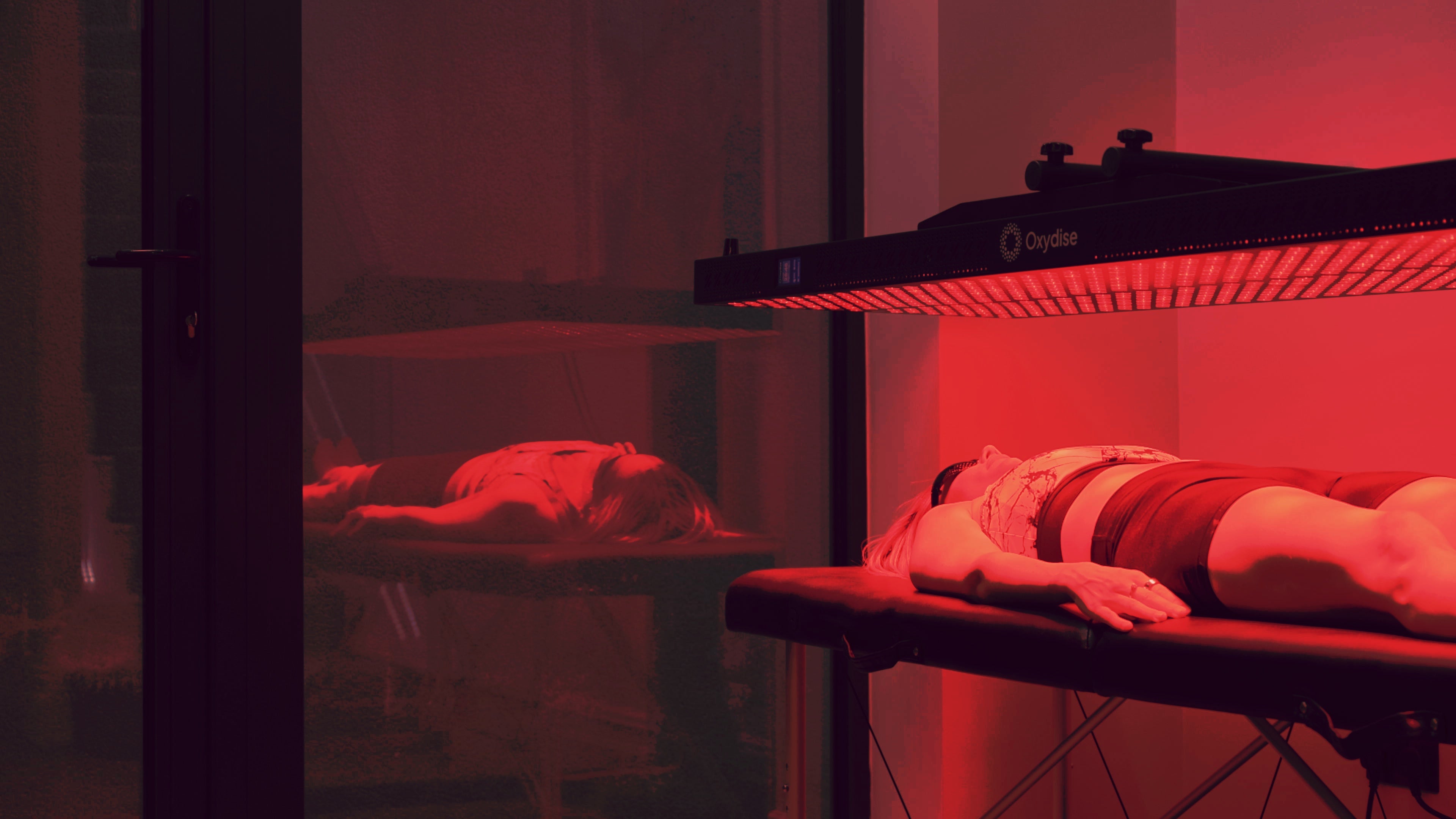
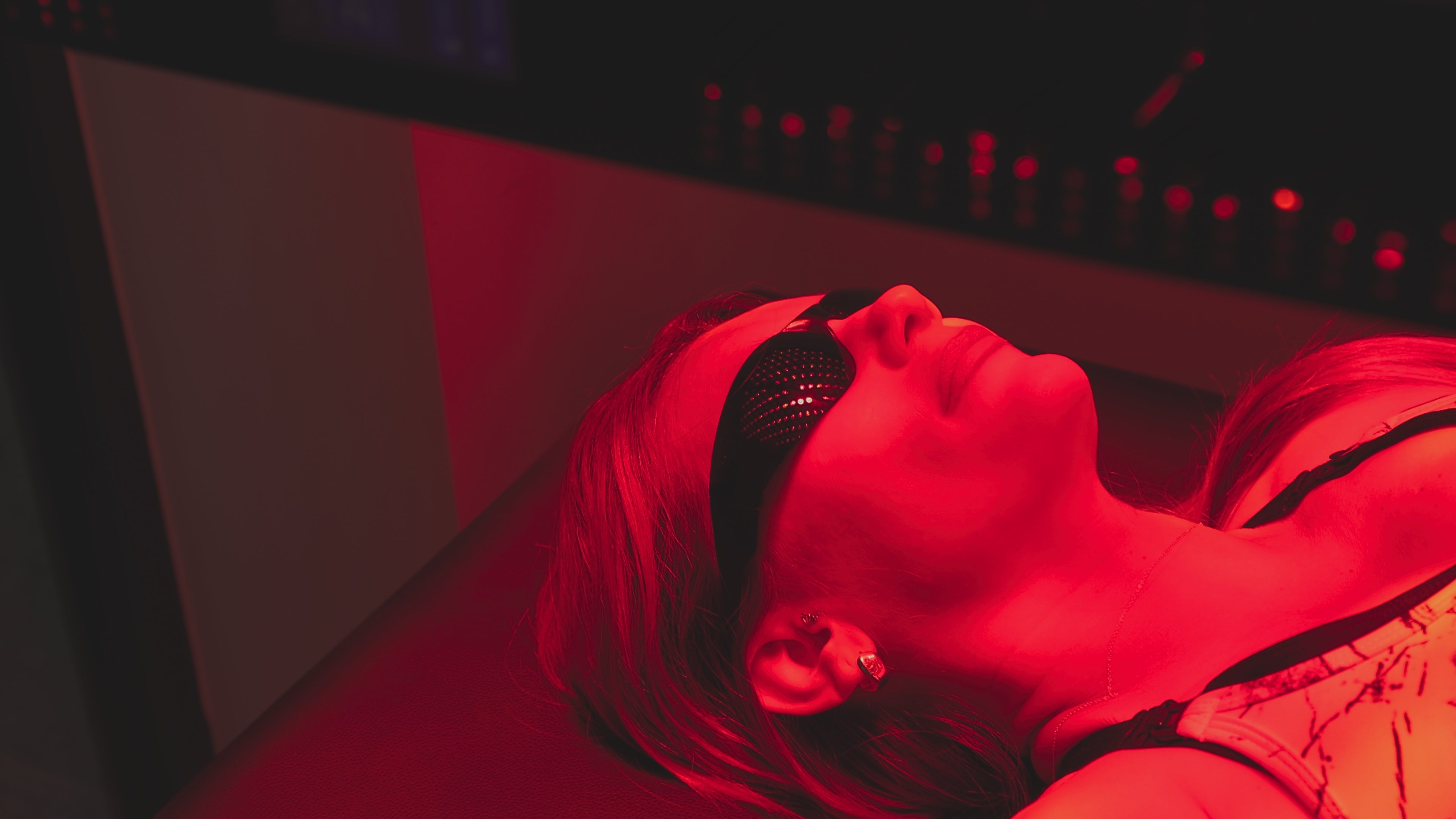
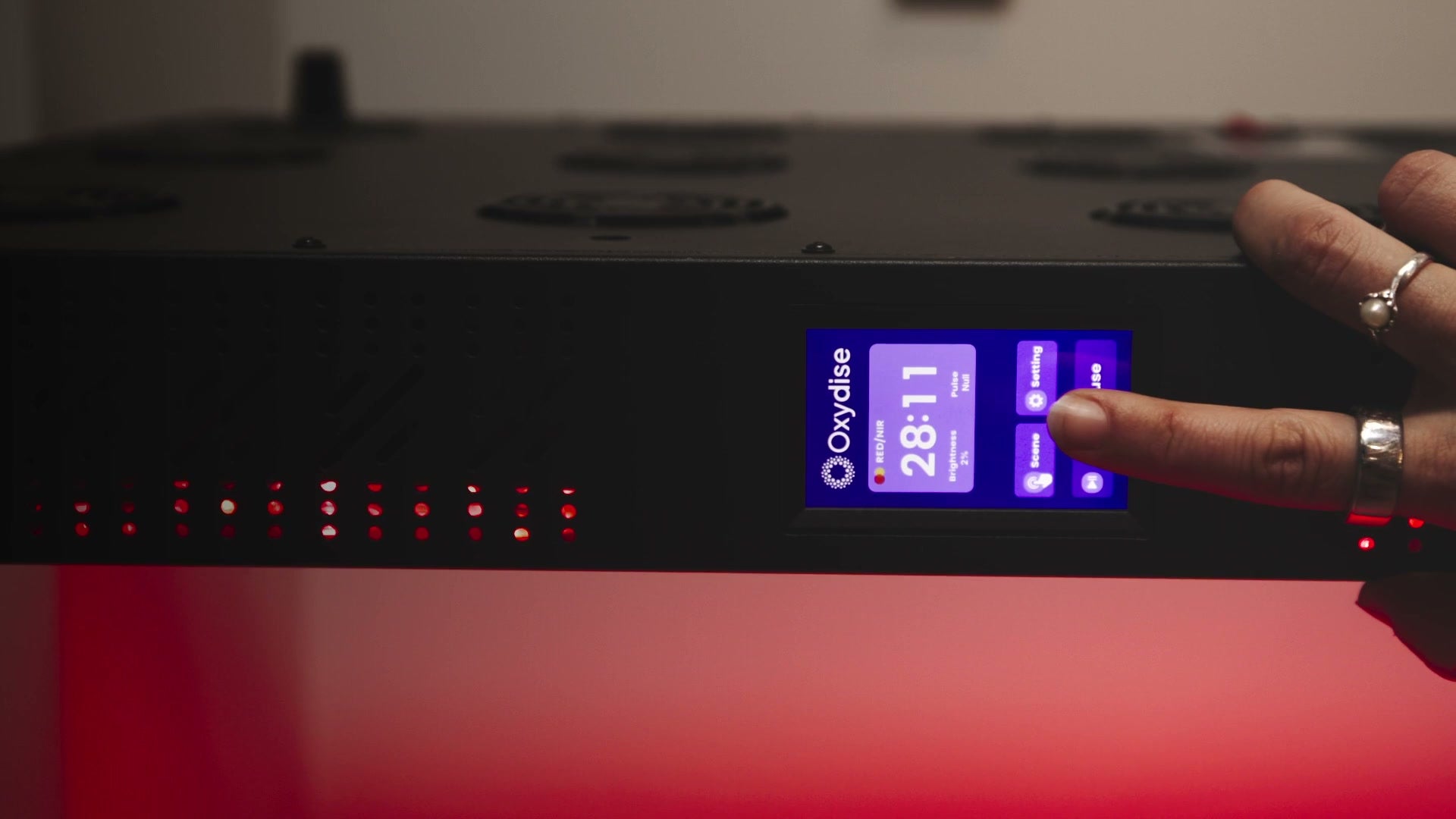
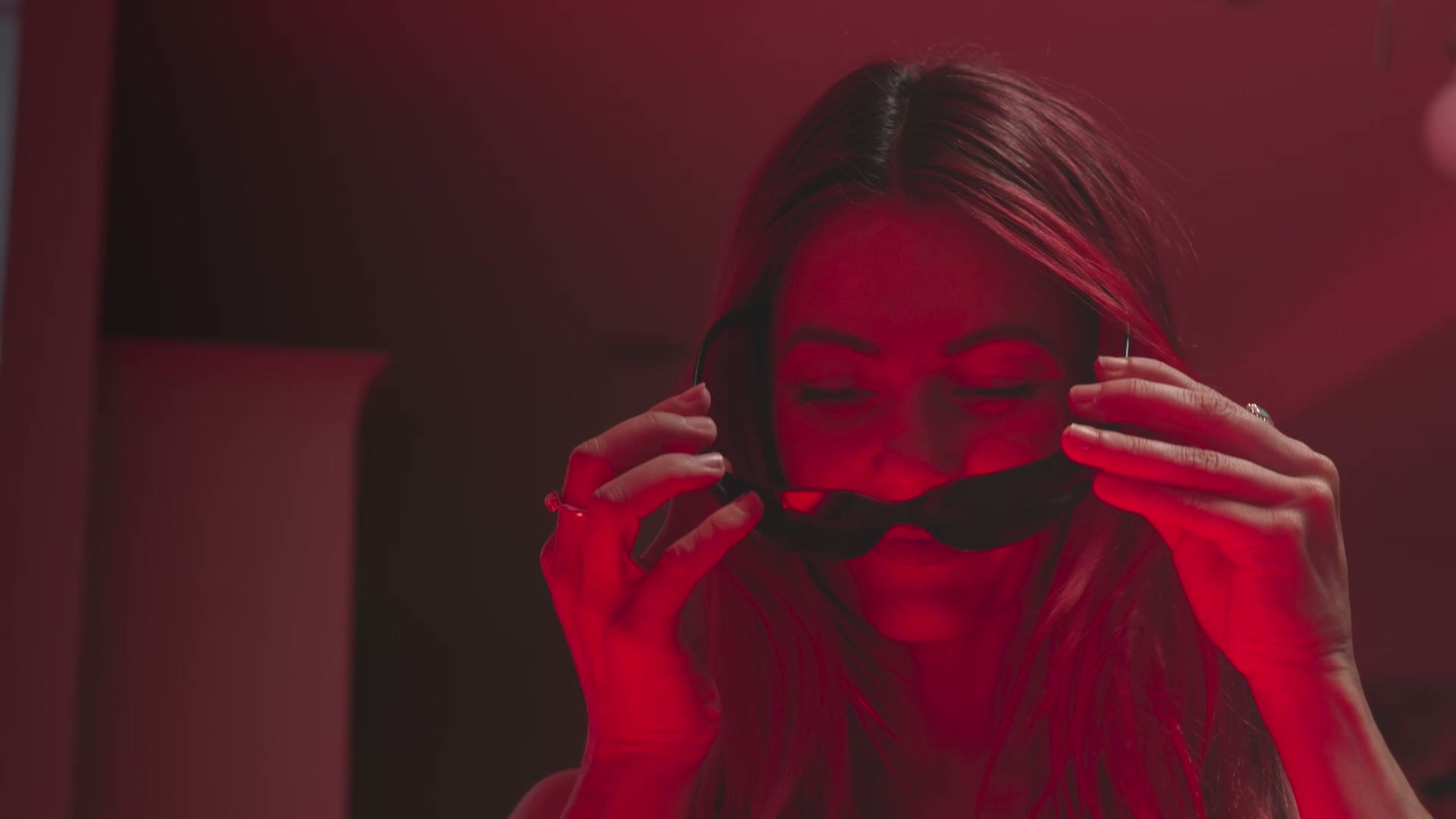
Position yourself in front of the panel, or lie in the bed. Gentle warmth, never burning. Ten to twenty minutes, eyes covered, and the light has to reach skin to deliver a dose.

A full session, start to finish

Calm and simple, and mostly about showing up.

When to do it

Timing matters more than most people expect. In Professor Jeffery’s vision trials, morning doses, before about 11am, produced the improvement, and the same dose in the afternoon did nothing. So we talk about when you use it, not just how long.

The screening conversation

Is it safe for everyone?

No, and that is the point of screening. Photosensitive conditions, some photosensitising medications and pregnancy all mean the clinician route first. We ask the safety questions on every call.

The full picture

No. That is why we screen first, always.

Red light is non-invasive and considered low risk used sensibly. It still is not for every person in every situation.

When we say the clinician route first

  • Photosensitive conditions such as lupus or porphyria
  • Photosensitising medications, including some antibiotics, acne and psychiatric medications
  • Pregnancy, especially full-body use
  • Active or suspected cancer, unless your clinical team advises otherwise

Eyes stay covered for full-body and face work. We ask the safety questions on every call, before anything progresses.

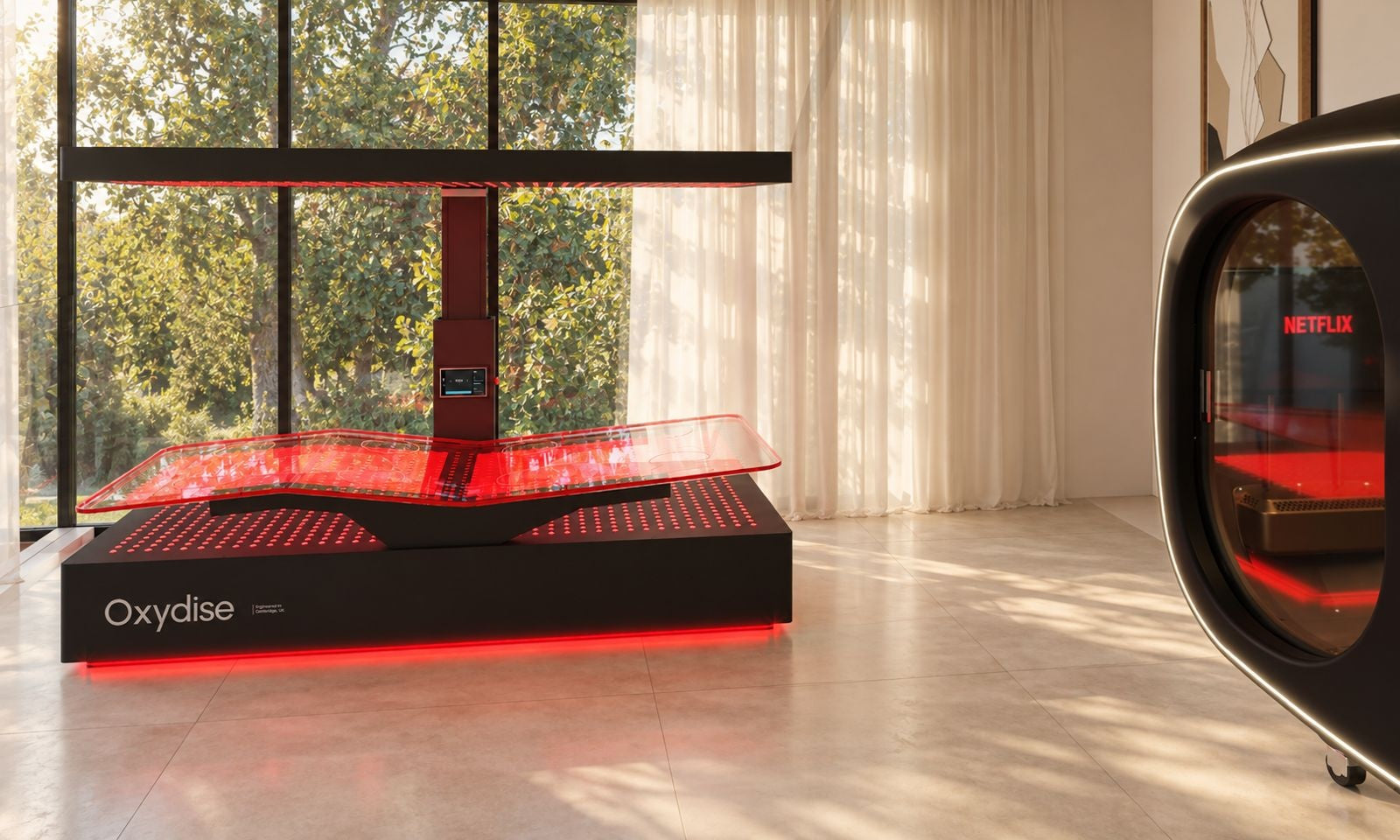
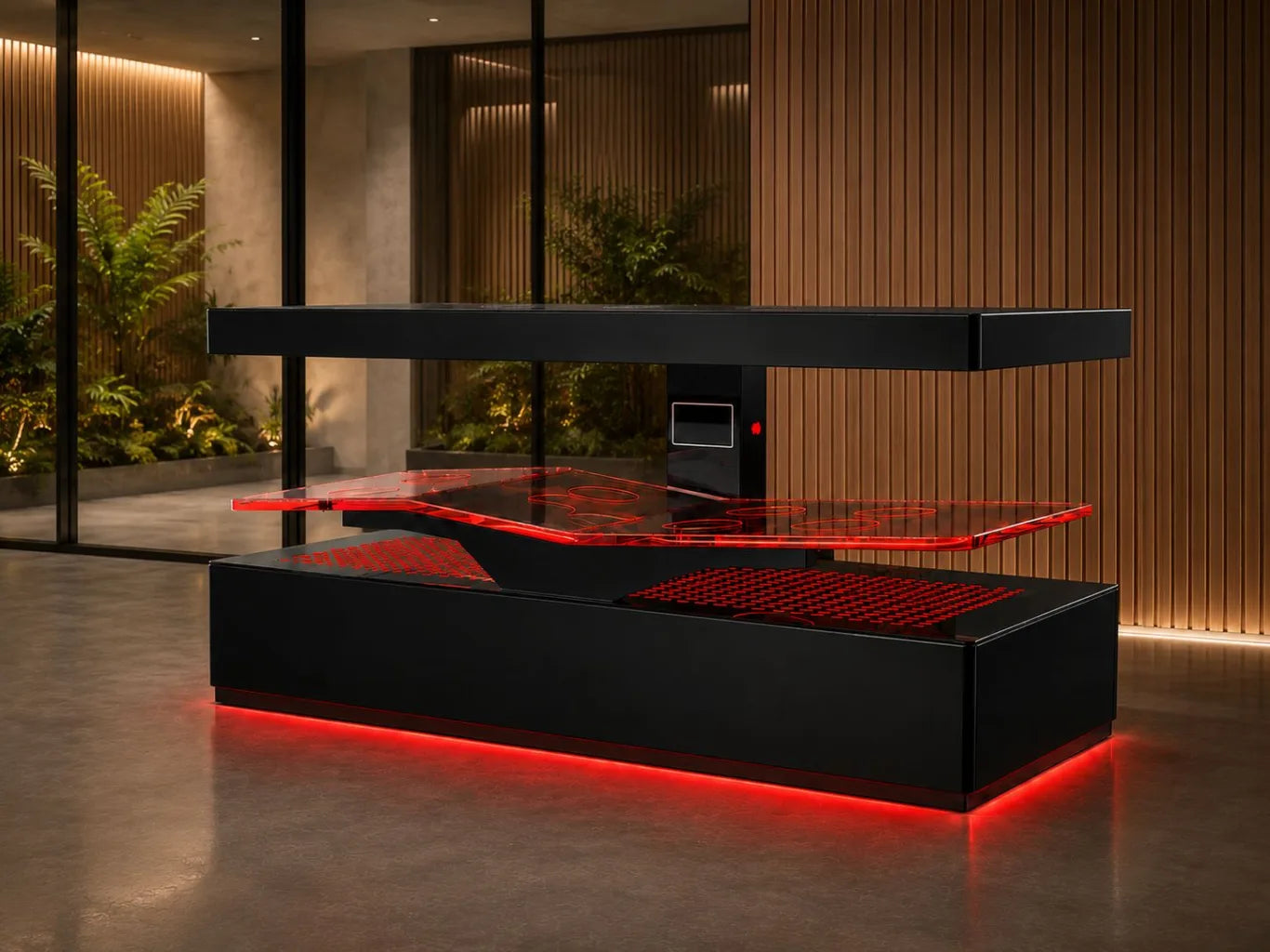
Oxydise Red Light Therapy bed with PEMF in a home wellness space

Panels or a bed, and at home

Panels are targeted and flexible. Beds are full-body and consistent. Quality is the verified dose reaching your skin, not the LED count, and we deliver and set up every system ourselves.

The full picture

The right format depends on your goal, space and routine.

FeaturePanelsBeds
CoverageTargeted: face, joints, muscle groupsFull-body, both sides
Best forHome use, skin and beauty goals, smaller spacesRecovery routines, clinics, gyms, performance spaces
DoseDistance and time set itConsistent by design

What actually sets the dose

Six things: wavelength, the power actually reaching your skin, time, distance, coverage and frequency. Brightness is not one of them, and quality is verified dose rather than LED count.

One more thing from the research: the effect behaves like a switch rather than a dial. The published vision trials used about 8 milliwatts per square centimetre, a modest level, and once the dose is delivered, extra light adds nothing.

Shaped with the research

Our light systems are shaped with Professor Glen Jeffery at UCL, and we deliver and set up every system ourselves.

Try a session at a wellness lab before any bigger decision.

Call us · 01223 657444
1week

Warmth, and not much else. That is normal, and not the point yet.

2weeks

The routine forms. Morning doses tend to land best.

4weeks

Consistency starts to show. Judge nothing dramatic yet.

8weeks

Where you judge it, against the goal you set.

How a routine tends to feel. Reported patterns rather than promises, and individual results vary.

Making it a routine

Not one dramatic session. A sensible dose, repeated three to five times a week, which is why the machine lives at home. Consistency beats occasional intensity.

The full picture

A sensible dose, repeated, beats occasional intensity.

Ten to twenty minutes, three to five times a week, at the distance the protocol sets. Morning doses tend to land best in the research, and a machine at home removes the travel, which is what usually breaks the habit.

A short dose also lasts longer than you would guess: in the vision trials, one three minute morning exposure held for about a week. Protocols differ by goal, so we set the rhythm with you.

One more thing about light

Professor Jeffery also points out that modern LED lighting spikes hard in the blue and carries almost none of the balancing red and near infrared we evolved under. Older incandescent and halogen bulbs sit much closer to that balance. Using light well means thinking about your whole lighting environment, not only the sessions.

50

Studies in our library

Every one linked at the source on our clinical studies page, organised by category and tier.

Where the evidence is strongest

The honest split, tier by tier.

Strongest today

  • Photobiomodulation for oral mucositis in cancer care, recommended in MASCC/ISOO clinical practice guidelines
  • Knee osteoarthritis pain, systematic review and meta-analysis in BMJ Open
  • Neck pain, meta-analysis in The Lancet
  • Muscular performance and fatigue, meta-analyses of randomised trials
  • Skin and collagen, randomised controlled trials

Younger, moving fast

  • Brain and cognition, including randomised trials in adults over 50
  • Vision and healthy ageing, including the LIGHTSITE III trial
  • Sleep, mood, thyroid and Parkinson’s research

All 50 studies, organised into 18 categories with their tiers, are on the clinical studies page.

18

Research areas

From skin, muscle and joints to brain, sleep and vision, with very different levels of evidence.

Try it before you buy it.

Book a session at an Oxydise wellness lab and test the equipment for yourself, with the team on hand.

1,000+rentals to date
100,000+session hours run
3wellness labs

Oxydise red light systems are wellness products and are not intended to diagnose, treat or cure any medical condition. Speak to your GP before use if you have a health condition.