Hyperbaric Oxygen,
explained.

Everything I wish someone had told me before my first session: what it is, how it works, what it feels like, and whether it is right for you.

From the Oxydise Deep Dive Podcast: Jason Sonners on how Hyperbaric Oxygen changed his life. If you would rather watch than read, start here. Watch on YouTube

Eight simple steps.

The short version of everything I have learned since 2019. Open any step for the detail.

What HBOT is

You breathe oxygen inside a chamber where the air pressure is raised above normal. That is the whole machine. The pressure is what makes the oxygen do more.

The full picture

A short history, and where it is used today.

A chamber gently raises the air pressure around you while you breathe oxygen through a mask. Under pressure, your blood carries far more oxygen than it can at sea level.

Hyperbaric means above normal pressure. Sea level air is 1.0 ATA; home and wellness chambers typically run between 1.3 and 2.0 ATA. The idea is over 350 years old, and hospitals have used it for decades, first for divers, later for wound care and more.

Where it is used

Established medical uses

  • Decompression sickness
  • Carbon monoxide poisoning
  • Wounds that will not heal, including diabetic ulcers
  • Radiation tissue injury
  • Certain serious infections
  • Sudden hearing loss
  • Crush injuries and skin grafts

Wellness and emerging uses

  • Sports recovery and performance
  • Concussion and brain injury recovery
  • Long COVID and fatigue
  • Healthy ageing and cognition
  • Sleep, energy and focus
  • Skin and healing

There are 15 recognised clinical indications in all. Oxydise chambers are used for the wellness side, and we are honest about what the evidence does and does not show. It is laid out, study by study, in .
Why pressure matters

Under pressure your blood can carry far more oxygen than normal breathing allows. A fizzy drink works the same way: the gas stays dissolved while the bottle is under pressure.

The full picture

Henry’s law, and what the numbers mean.

One law from 1803: the amount of gas that dissolves in a liquid rises with the pressure above it. Raise the pressure and more oxygen dissolves into your blood, independent of your red blood cells.

Pressure at a glance

PressureWhat it is likeTypical use
1.0 ATANormal air at sea levelEveryday breathing
1.3 ATAAbout 3 metres underwaterSoft-shell home chambers
1.5 ATAAbout 5 metres underwaterThe top of the soft-shell range
2.0 ATAAbout 10 metres underwaterHard-shell, stronger protocols

Soft shell or hard shell

Our soft-shells run up to 1.5 ATA and are tested in-house to 1.75. Hard-shells run up to 2.0 and are tested to 3.0. Both work on the same physics; higher is a stronger dose, not a better one.

0%Breathing airyour baseline
+500%1.3 ATAmore oxygen in the plasma
+830%1.5 ATAmore oxygen in the plasma
+1,670%2.0 ATAmore oxygen in the plasma

Oxygen goes further

Normally oxygen travels on your red blood cells, and they are already nearly full. In the chamber it also dissolves into the plasma, the liquid of the blood, reaching places that are usually hard to supply.

The full picture

My smartwatch says 98%. Where would more oxygen even go?

Fair question, it was my first one. That 98% is your red blood cells, the delivery trucks, and they are already nearly full. HBOT does not top up the trucks. Under pressure, oxygen dissolves directly into the plasma, the liquid of the blood itself, which normally carries almost none.

The dose, in numbers

  • Breathing air: about 3 mL of oxygen per litre of plasma. Your baseline.
  • 1.3 ATA, mask oxygen: about 18 mL/L, six times baseline.
  • 1.5 ATA, mask oxygen: about 28 mL/L, roughly nine times baseline.
  • 2.0 ATA, mask oxygen: about 53 mL/L, almost eighteen times baseline.

More carried in the liquid means more reaching tissues the trucks struggle to serve. Plasma also flows where red cells cannot squeeze, and the oxygen diffuses further from each capillary. This is the mechanism everything else builds on. Illustrative figures, individual physiology varies.

What your body does with it

Extra oxygen gives cells more of what they use to repair, settle inflammation and make energy. That is why people come to us for recovery, healing and healthy ageing.

13 ways it works

Researchers count more mechanisms of action here than for almost any drug.

These thirteen are the ones covered in our practitioner training. None of them are guaranteed outcomes.

  1. More oxygen, carried further

    You get more oxygen, and it reaches places normal blood flow struggles to.

    Under pressure, oxygen dissolves straight into the plasma and travels beyond normal red-blood-cell delivery, reaching tissue restricted by swelling or injury. The foundation every other mechanism builds on.

    Hyperoxygenation · Hadanny & Efrati, Biomolecules, 2020
  2. Calmer inflammation

    It can help the body settle inflammation into a healthier balance.

    Oxygen exposure down-regulates the pro-inflammatory messengers that keep swelling, soreness and stalled recovery running.

    Reduced cytokine activity · Benson et al, 2003
  3. Building and repairing tissue

    Your body needs oxygen to rebuild its scaffolding.

    Collagen, the structural protein of skin, tissue and healing wounds, cannot be built without oxygen. Fibroblast activity and collagen synthesis are the engine of the repair phase.

    Fibroblast & collagen synthesis · Eskes et al, World J Surg, 2011
  4. Waking up the body’s repair cells

    Sessions may prompt your body to release its own repair cells.

    Courses of HBOT are associated with significantly increased circulating stem cells, up to an eight-fold rise over a block at 2.0 to 2.5 ATA.

    Stem-cell proliferation · Thom et al, Am J Physiol, 2006
  5. Shrinking gas bubbles

    Pressure physically compresses gas bubbles in the blood.

    The classic diving medicine mechanism
  6. Training your antioxidant defences

    Controlled stress makes your cells more resilient.

    Reduced lipid peroxidation · Hadanny & Efrati, 2020
  7. Less swelling, same supply

    Vessels narrow to reduce swelling, while oxygen-rich blood keeps tissue fed.

    Vasoconstriction with maintained delivery
  8. A calmer immune reaction

    White cells stop over-reacting after injury.

    Reduced leukocyte adherence
  9. Disarming bacterial toxins

    Oxygen interferes with the toxins some bacteria produce.

    Toxin inhibition
  10. Sharper infection defence

    Your immune cells kill microbes using oxygen; HBOT restores their ammunition.

    Leukocyte oxidative killing
  11. Helping antibiotics work harder

    Some antibiotics need oxygen to do their job properly.

    Antibiotic synergy
  12. New blood vessels, new nerve growth

    Growth factors such as VEGF drive angiogenesis and nerve repair.

    Growth factor release · Hadanny et al, Aging, 2020
  13. Slower cellular ageing markers

    Telomere and senescence changes measured in isolated blood cells.

    Telomerase activity · Hachmo et al, Aging, 2020

Each mechanism has its own evidence base, some strong, some early.

Applied to real goals

The same thirteen mechanisms, in different combinations.

The mechanisms combine differently depending on why people come to us. The six patterns we see most:

  • Health challenges

    Alongside, never instead of, medical care. We explain the mechanisms, share the research, screen carefully and work alongside your clinicians.

    Main mechanisms: hyperoxygenation · calmer inflammation · tissue repair and new blood-vessel growth
  • Sport & performance

    Adaptation happens during recovery. Studied for oxygenating worked muscle and settling inflammation faster.

    Main mechanisms: muscle oxygenation · reduced inflammatory signalling · mitochondrial ATP production
  • Longevity & brain health

    Trials in healthy older adults reported improved cognition, longer telomeres and fewer senescent cells over structured courses. Research, not promise.

    Main mechanisms: cerebral oxygenation · telomere and senescence effects · stem-cell mobilisation
  • Anti-ageing & beauty

    The scaffolding biology under skin quality. Paired with red light: oxygen from within, light at the surface.

    Main mechanisms: fibroblast and collagen synthesis · angiogenesis · stem-cell mobilisation
  • Sleep & stress

    The change our clients report most consistently: 91% of 113 surveyed. Self-reported experience, not a sleep treatment.

    Main mechanisms: hyperoxygenation · calmer inflammation · nervous-system settling
  • Energy & fatigue

    Fatigue is increasingly researched as an energy-production problem. 88% of surveyed clients reported more energy. Research framing, not a treatment claim.

    Main mechanisms: mitochondrial ATP production · hyperoxygenation · calmer inflammation

Each goal has its own evidence base, some strong, some early.

Clinical studies

What a session feels like

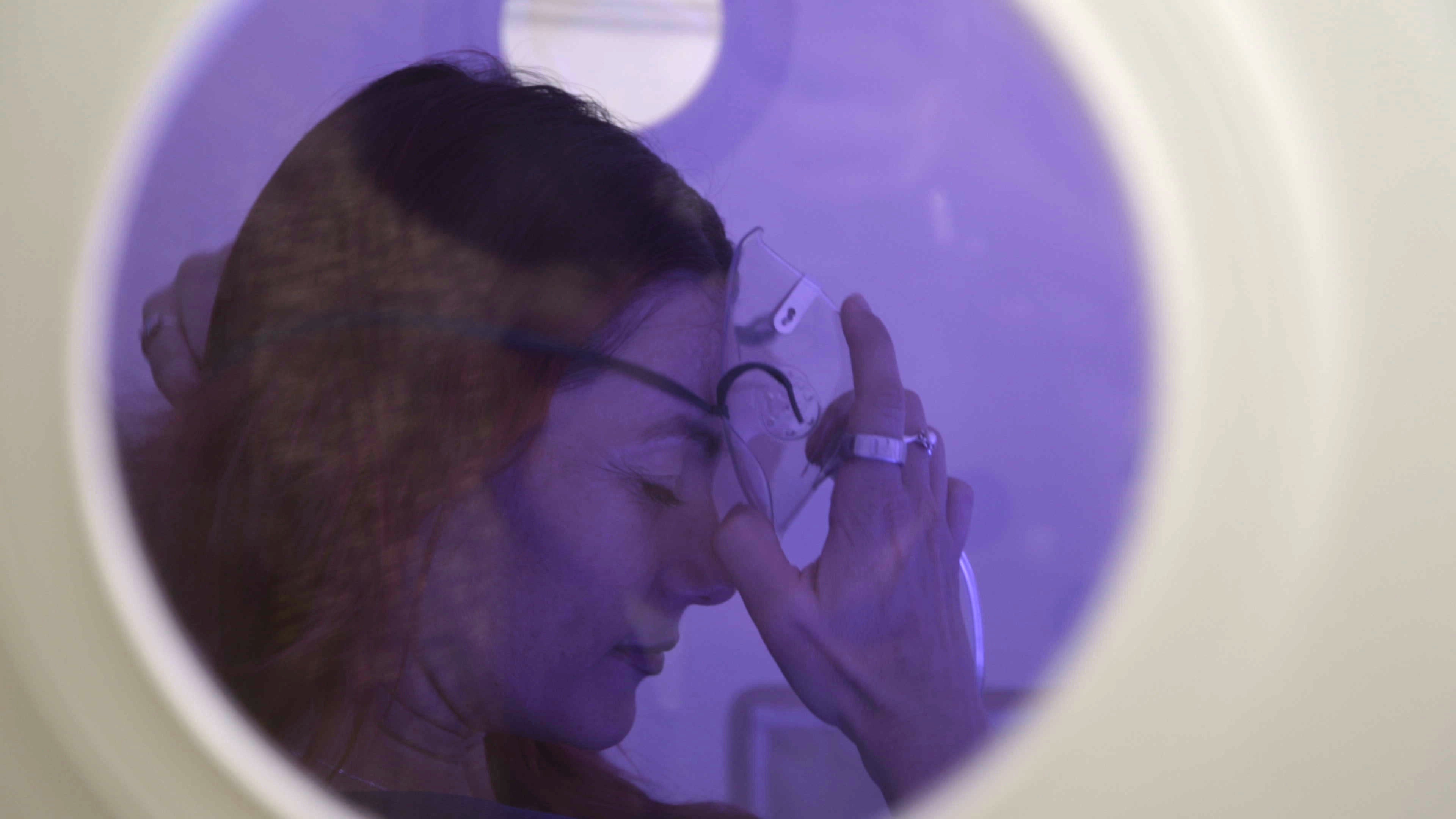
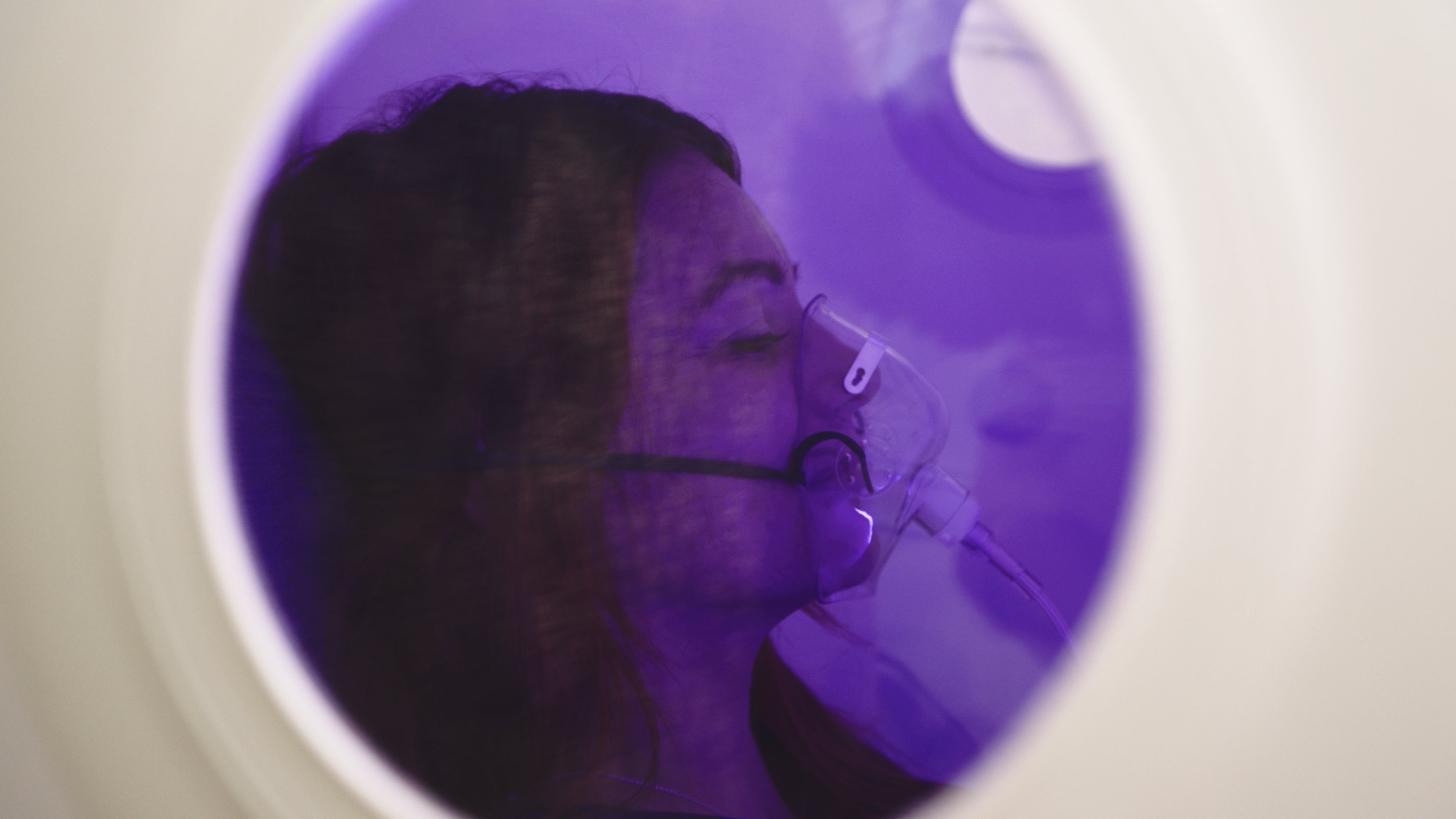
About an hour. Ears feel the pressure like a plane landing, then you read, work or sleep. My first session was mostly boring. That is the point.

A full session, start to finish

What actually happens in about an hour.

Timeline

  • First few minutes: pressurising. The only part you notice.
  • The middle: at pressure. This is the session, 60 to 90 minutes.
  • Last few minutes: easing down, just as gentle.

Then repeat. The course does the work. Mild tiredness after the first few sessions is normal and passes. No recovery time needed. We ask the safety questions on every call before anything progresses; sometimes the honest answer is a lower pressure, or no chamber at all.

Edward Gibson-Smith, Oxydise wellness advisor

Is it safe for everyone?

No, and that is the point of screening. A history of collapsed lung, air-trapping lung conditions, a current chest infection or certain ear and sinus issues means the clinician route first. We ask the safety questions on every call.

The full picture

No. That is why we screen first, always.

Used correctly, HBOT is considered low risk at the mild to moderate pressures of home and wellness use. It still is not for everyone.

When we say the clinician route first

  • A history of collapsed lung, or air-trapping lung conditions
  • A current chest, ear or sinus infection
  • Certain ear and sinus conditions that make equalising difficult
  • Some heart, neurological and pregnancy circumstances

We ask the safety questions on every call, before anything progresses. Sometimes the honest answer is a lower pressure, or no chamber at all.

Oxydise Lying Chamber 1.5 ATA in the blue studio

The chambers, and having one at home

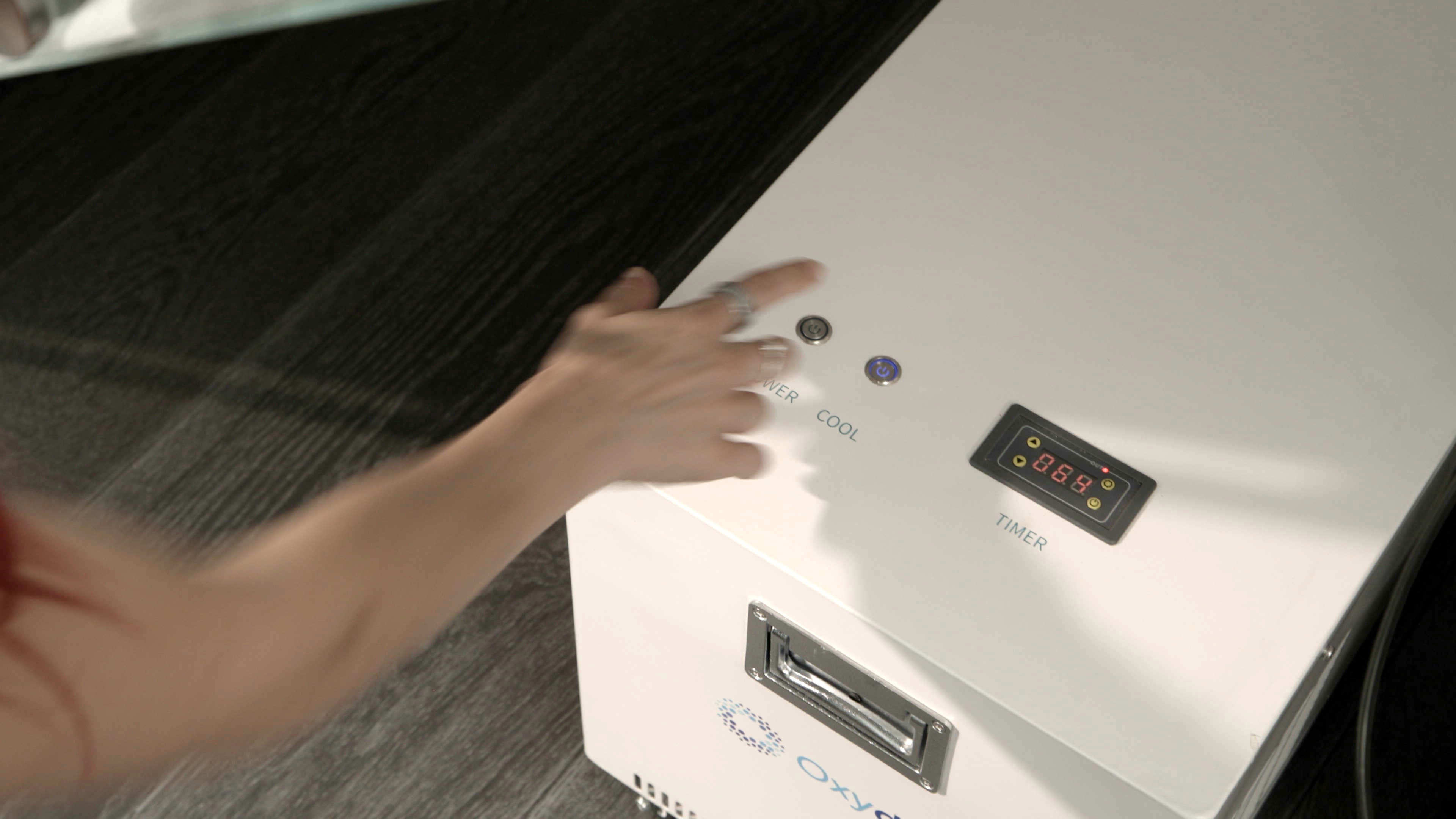
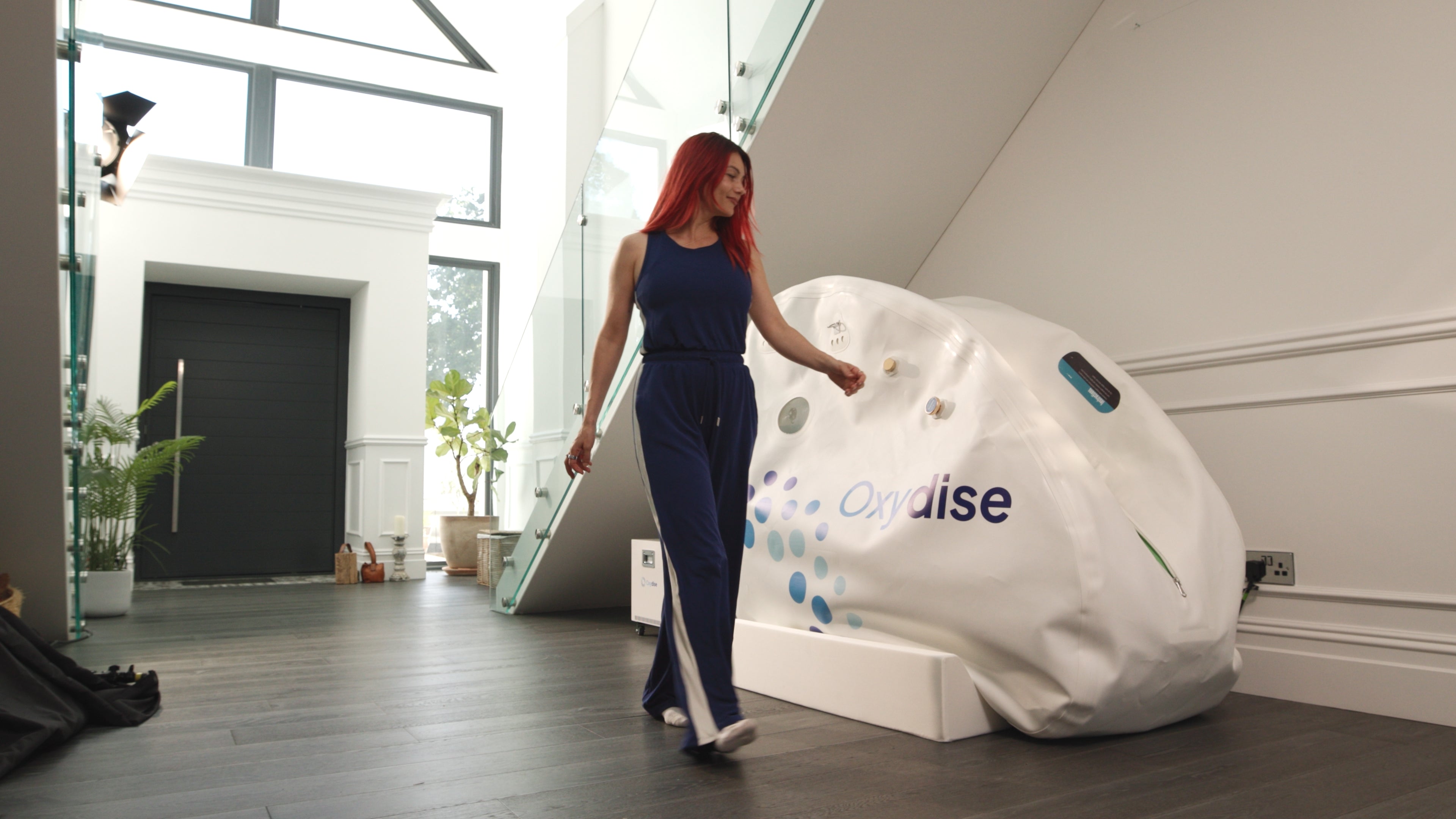
Two families: soft-shells up to 1.8 ATA, and hard-shells up to 2.0 ATA for stronger protocols. Both run from a normal household socket. Most of our customers have one at home. We deliver, install and test every system ourselves.

The full picture

Soft-shell or hard-shell, and what your home needs.

FeatureSoft-shellHard-shell
PressureUp to 1.5 ATA, tested to 1.75Up to 2.0 ATA, tested to 3.0
Best forRepeated home and wellness useStronger protocols, clinics and serious home setups
PowerA normal socketMore power, surveyed first

Having one at home

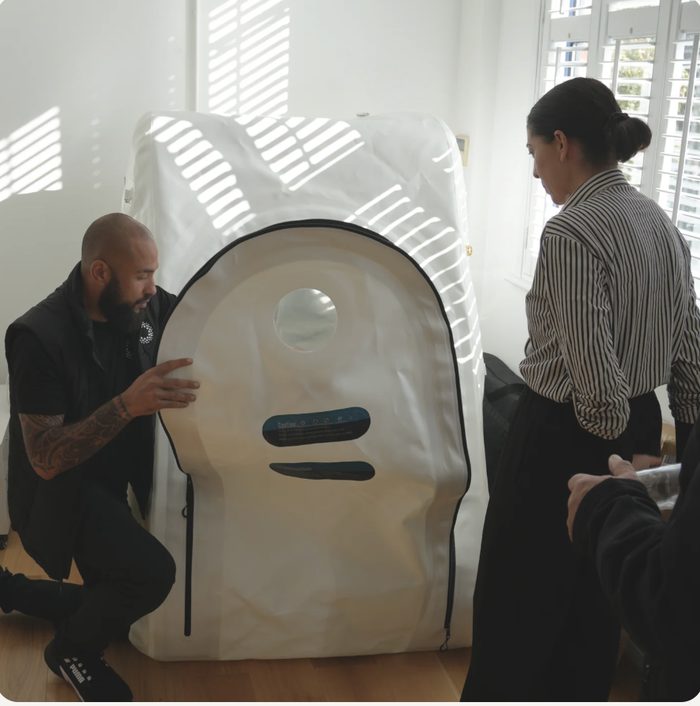
A soft-shell fits through a standard doorway and runs from a normal plug. A hard-shell needs a proper look at access first, which is why we do an access check, including a 3D scan from your phone. We deliver, install and test every system ourselves, and our own engineers service every machine we sell or rent.

The routes in

Buy outright, rent monthly, or rent-to-buy, and you can feel a session at one of our wellness labs before any bigger decision.

Both families work on the same physics. Higher is a stronger dose, not a better one.

Call us · 01223 657444
10sessions

The routine settles. Sleep after a session is the first change many mention.

20sessions

Energy steadies through the day. The hour becomes a habit.

40sessions

The block effect. Quicker recovery after hard days.

60sessions

Where you judge it, against the goal you set.

How a course tends to feel. Reported by clients rather than promised, and individual results vary.

Making it a routine

One session is a dose. A course is the therapy, so HBOT works best done regularly. A chamber at home removes the travel, which is what usually breaks the habit.

The full picture

How often, and how to fit it in.

For many of the recovery and wellness goals people bring to us, a course commonly means 40 to 60 sessions, taken daily or near daily. The exact rhythm is agreed on the call, matched to the goal rather than to the biggest number on the dial.

How a course tends to feel

  • Week 1: the ritual forms. Ears, mask, timing. Learning the routine, not judging results.
  • Week 4: the habit holds. For many people this hour becomes the calmest part of the day.
  • Week 12: where you judge it. Where the research measures change, and where you should measure yours.

Home or lab

Both work the same way. A home chamber removes the travel, which is what usually breaks the habit. Soft-shells run from a normal socket, and we deliver, install and test every system ourselves.

Buy outright, rent monthly, or rent-to-buy. Try a session at a wellness lab first.

Call us · 01223 657444
15

Established uses

Clinical indications recognised by hospital medicine, per the UHMS. For these, HBOT is the prescribed treatment.

See the list

Recognised by the UHMS, 15th edition. Doctors call these the on-label indications.

  1. Air or gas embolism
  2. Decompression sickness
  3. Carbon monoxide poisoning
  4. Gas gangrene
  5. Crush injury and compartment syndrome
  6. Central retinal artery occlusion
  7. Selected problem wounds that will not heal
  8. Severe anaemia
  9. Intracranial abscess
  10. Necrotising soft tissue infections
  11. Refractory osteomyelitis
  12. Delayed radiation injury
  13. Compromised grafts and flaps
  14. Acute thermal burns
  15. Sudden sensorineural hearing loss

Counts differ between sources depending on grouping. In the UK, the NHS routinely funds hyperbaric treatment mainly for decompression illness and gas embolism.

100+

Still being researched

Applications explored worldwide beyond the established list, with very different levels of evidence.

What did 113 Oxydise clients report?

More than 1,000 customers served. Results from the 113 who completed our questionnaire after a course. Self-reported, not a promise.

  • 91%better sleep
  • 88%more energy
  • 87%better wellbeing
  • 82%less pain
  • 89%faster recovery
  • 84%lower stress
The full results

Self-reported by 113 clients. Curves are illustrative of the typical pattern, not a promise.

91%Better sleep
Deep & REM · h

Deep and REM sleep per night, up steeply, then held.

2h1h1530m REM · 1h 47Deep · 1h 25 1204060 HBOT sessions
88%More energy
Energy · 1–10

Self-rated daily energy, 1 to 10.

1051 4 → 8 1204060 HBOT sessions
87%Better overall wellbeing
Good days · /wk

Days a week feeling good.

Sessions 1 to 7
2/7
Sessions 54 to 60
6/7
82%Pain reduction
Pain · 0–10

Self-rated pain, 0 to 10.

852 6 → 3 1204060 HBOT sessions
89%Faster recovery
Readiness · 0–100

Readiness score, tracked with an Oura ring.

68Session 1
79Session 30
91Session 60

Less downtime after training or events, readiness climbing as sessions add up.

84%Lower stress
HRV · ms

Average nightly HRV, higher means calmer.

604530 1204060 HBOT sessions

Outcomes self-reported after a course of HBOT sessions. Progression curves are drawn from the questionnaire rather than session-by-session tracking. Individual results vary, and this is not a promise or a treatment claim.

Try it before you buy it.

Book a session at an Oxydise wellness lab and test the equipment for yourself, with the team on hand.

1,000+rentals to date
100,000+session hours run
3wellness labs

Oxydise chambers are wellness products and are not intended to diagnose, treat or cure any medical condition. Speak to your GP before use if you have a health condition.